 Your Personal AI
Your Personal AI
Your Personal AI
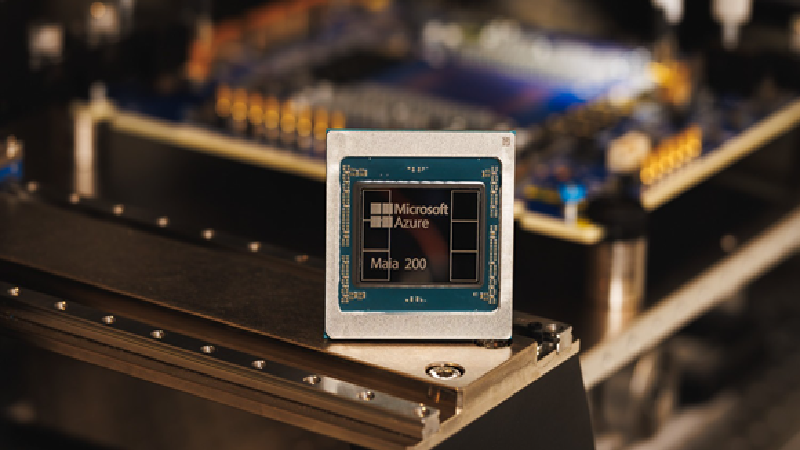
Microsoft has debuted Maia 200, its newest in-house AI accelerator designed specifically for large-scale inference workloads across Microsoft and OpenAI services.
The company claims Maia 200 outperforms Amazon’s Trainium 3 and Google’s TPU v7 on key benchmarks, delivering roughly 30% better efficiency than Microsoft’s current hardware. The chip is optimized for high-throughput, low-latency inference rather than training, reflecting the growing cost and scale pressures of serving frontier models.
Microsoft said Maia 200 will power OpenAI’s GPT-5.2 models, Microsoft’s internal AI teams, and Copilot experiences across its product lineup, with deployment beginning immediately across Azure data centers.
Alongside the hardware launch, Microsoft is releasing a preview SDK aimed at developers, positioning it as a viable alternative to Nvidia’s industry-standard CUDA stack. This software push is intended to reduce vendor lock-in and weaken Nvidia’s combined hardware–software moat.
Why it matters: Custom AI chips are no longer just about cost savings — they are strategic leverage. With Google, Amazon, and now Microsoft all fielding competitive in-house accelerators and developer tooling, Nvidia faces its most credible multi-front challenge yet, especially on the software layer that has long underpinned its dominance.