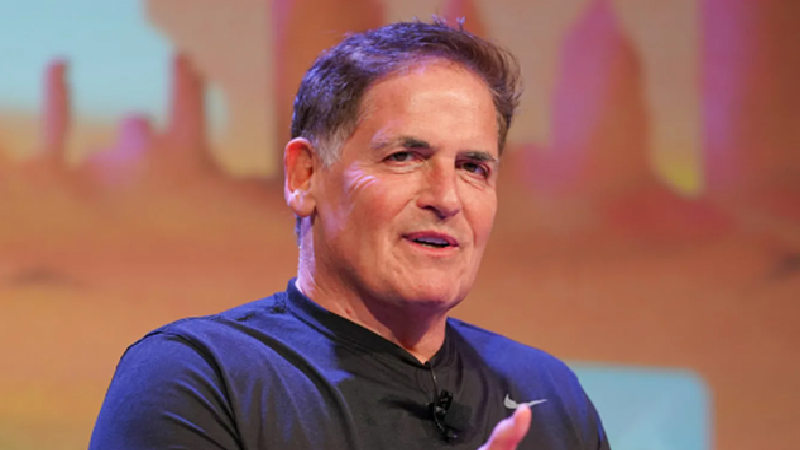
Mark Cuban, billionaire entrepreneur and Dallas Mavericks owner, recently said that he expects artificial intelligence to generate the world’s first trillionaire, “and it could just be one dude in a basement,” during CNBC’s “High Performance” podcast on Sunday
according to CNBC.
He explained that while we are still in AI’s “preseason,” the coming breakthroughs could far exceed anything we’ve seen so far. “We haven’t seen the best, or the craziest, of what [AI] is going to be able to do,” Cuban remarked
as per Benzinga.
Cuban drew parallels to early PCs and smartphones—initially underestimated, then indispensable. He believes that whoever can make AI essential will “make a lot of money.” He cited his own use of AI tools like ChatGPT in both work and personal routines, tracking tasks and habits
Benzinga reports.
Cuban also acknowledged broader concerns such as job displacement and environmental impact, urging people to “engage with AI tools … to better understand and improve them”
per the same source.
Why it matters: Cuban’s projection taps into both tech optimism and the financial stakes of AI innovation. If “just one dude in a basement” can tap the next big AI application, it signals both opportunity and disruption at an unprecedented scale. His comments spark a broader conversation about democratizing access to powerful AI tools—and whether such access truly levels the playing field.
This idea has sparked vibrant discussion online, including on platforms like Reddit, where one user soberly reminded:
> “It’s going to be one of those guys that currently have hundreds of billions and are great at stealing your private data.” (
x.com,
reddit.com)
Others echoed his optimism, noting that AI could enable “parallel agentic problem-solving” at scale (
reddit.com).
Bottom line: Whether a garage startup founder or an established billionaire, Cuban’s vision of AI-driven wealth raises key questions—about who gets to create it, who benefits, and how society adapts.
 Your Personal AI