 Your Personal AI
Your Personal AI
Your Personal AI
The Announcement
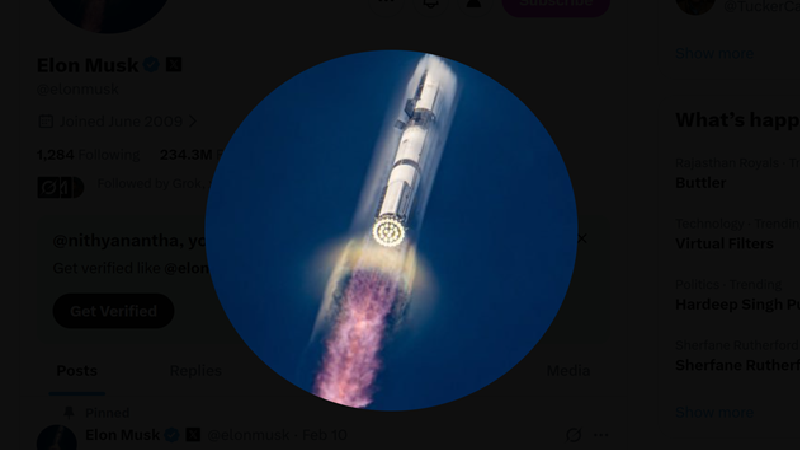
Elon Musk declared that “SpaceX will build a system that allows anyone to travel to Moon,” signaling what could become the company’s most ambitious commercial expansion yet — transforming lunar travel from elite astronaut missions into a scalable transportation system.
The statement follows detailed reporting from The New York Times and TechCrunch, which describe Musk’s renewed focus on the Moon amid internal leadership changes and IPO preparations across his broader business empire.
From Missions to Mass Access
According to The New York Times, Musk’s vision extends beyond occasional lunar landings. He is exploring the creation of lunar factories and space-based infrastructure that would support sustained economic activity beyond Earth.
This would rely heavily on SpaceX’s Starship system, which NASA has already selected for Artemis lunar missions. However, Musk’s framing suggests something far larger: a transportation network capable of eventually reducing costs enough to make lunar travel commercially viable for civilians.
IPO Pressure and Strategic Timing
TechCrunch reports that Musk’s lunar rhetoric comes at a pivotal time. With co-founders exiting and SpaceX reportedly preparing for a potential IPO window, public-facing moon ambitions could reinforce the company’s long-term growth narrative.
SpaceX is already valued among the world’s most valuable private companies. Expanding into lunar infrastructure adds a new strategic frontier — one that merges space transportation, manufacturing, communications, and potentially AI-driven automation.
The Infrastructure Angle
Musk has increasingly emphasized off-world industrialization. A lunar buildout could support:
• Manufacturing in low gravity environments
• Mining and resource extraction
• Space-based energy systems
• Deep space mission staging points
If executed, such infrastructure would position SpaceX not merely as a launch provider, but as the backbone of an off-Earth economy.
Challenges Ahead
Despite the bold announcement, significant technical, regulatory, and financial hurdles remain. Starship must achieve consistent reusability, lunar landing reliability, and scalable life-support systems before any mass-travel model becomes realistic.
Cost remains another major barrier. While Musk has historically driven launch prices down dramatically, lunar transport at scale would require exponential improvements in reliability and operational cadence.
Why It Matters
The Moon is becoming the next competitive arena for global powers and private companies alike. NASA’s Artemis program, China’s lunar ambitions, and commercial luna