 Your Personal AI
Your Personal AI
Your Personal AI
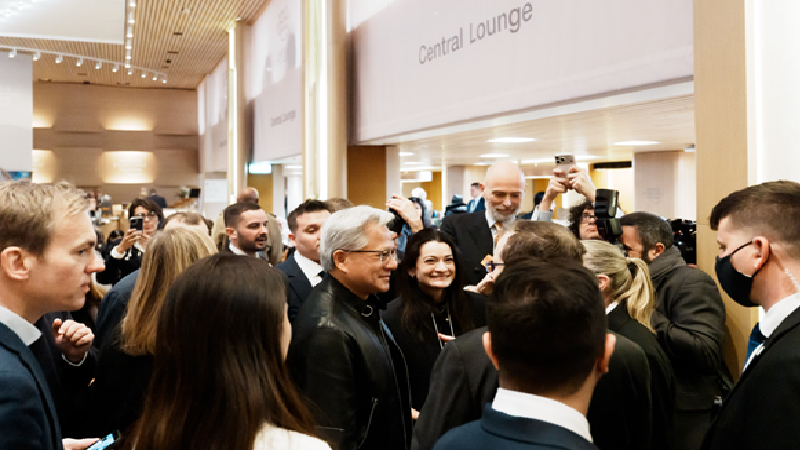
In the Davos 2026 live blog, the World Economic Forum spotlighted the session “AI Power Play, No Referees,” framing AI as a defining global competition shaped by diffusion, governance, and infrastructure — not just model capability (source).
Panellists included Kristalina Georgieva (IMF), Brad Smith (Microsoft), Ashwini Vaishnaw (India), Khalid Al-Falih (Saudi Arabia), and others. Georgieva cited IMF analysis that AI will affect roughly 40% of jobs globally (higher in advanced economies, lower in low-income countries), reinforcing the urgency of preparedness and workforce transition.
Speakers argued that “diffusion” depends on compute and data-center buildout, affordability, and demand stimulation. Brad Smith warned that AI access gaps could widen if infrastructure is blocked or unevenly financed, and that companies must earn local trust around energy and water impacts.
Why it matters: The AI race is evolving from “who has the best model” to “who can deploy safely, cheaply, and at scale.” Policy, infrastructure, and workforce readiness are becoming first-order competitive advantages.